30 de September de 2025

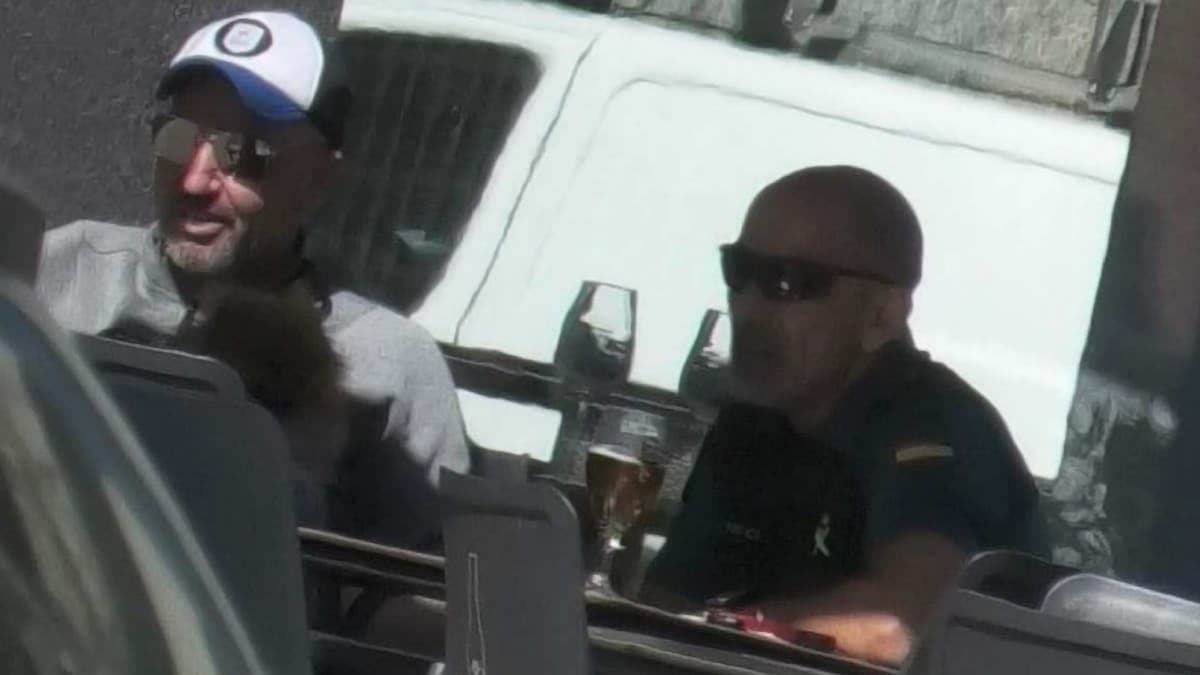
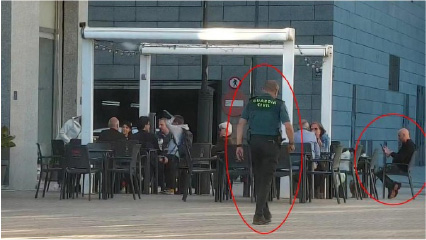
Image in which Guillermo Tormo and Civil Guard captain Jesús Fernández are seen on the terrace of an establishment.
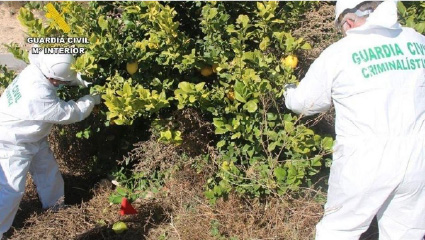
The National Court is investigating whether two other civil guards collaborated with the alleged criminal organisation that in December last year introduced 1,140 kilos of cocaine through the Port of Valencia. Civil Guard captain Jesús Fernández Bolaño, who was in charge of the Fiscal and Borders section for a decade, fell in the operation.
The judge has requested handwriting evidence from two agents who would have signed the permits for the trucks to leave the port area loaded with drugs and without having passed the relevant controls. The instructor, Francisco de Jorge, signed the ruling on September 8. As this newspaper has been able to learn, the expert reports have already been made.
The criminal group was allegedly led by Guillermo Toro. The investigation indicates that he had the help of Fernández Bolaño. Due to their position and knowledge, their participation was essential to be able to skip the port controls in complete safety. In addition, the captain became an “investor”, according to the monitoring and wiretaps carried out by Internal Affairs, which monitors the guards themselves. The recordings have been appealed by Francisco Galiana, the lawyer of one of the accused.
According to the summary, the organization had two ways of introducing drugs. One was through flat racks, industrial containers that have no roof or side walls. What they did, allegedly, was buy swimming pools here and send them to South America. Once they were empty, they drilled them to introduce the illicit cargo among the infrastructure.
The second, more conventional, was to import fruit, but behind the food were narcotics. In one of these shipments, 1,140 kilos of cocaine were seized in a municipality of Valencia. The novelty, according to the investigators, is that in the internal database they duplicated the license plates of the containers. The captain, because of his position, knew which ones were marked at origin, that is, they had an alert from the authorities of other countries because they suspected that they were carrying drugs.
Upon arrival at the Port of Valencia, the agents inspected the container with the license plate that had the notice. When they saw that he was only carrying legal material, they let him pass. But they also authorized the contaminated ones, since those, having an identification number different from the original, did not raise suspicion.
The two new civil guards about whom the judge is suspicious would enter the operation to take the drugs out of the port. To remove the containers, the carrier must have a document that proves that it has been checked and that everything is in order. These papers are signed by agents, who are the ones who with their signature and identification number assume that the work has been done correctly.
On the mobile phone of one of those investigated, the analysis of Internal Affairs has found that he had one of these permits before the date on which the container left. The permit is usually generated on the same day that it leaves the Port. That the organization previously had it and signed it by a civil guard is suspicious both for the investigators, the Anti-Drug Prosecutor’s Office and for the judge. The latter has ordered a handwriting test from agent T.M.C, who has been assigned to the Tax and Borders section of the Port of Valencia since 1996.
The second officer, A.G.C., has been in the same section since 2002. In his case, he signed a similar permit a year earlier. The organization allegedly sent a totally legal container to check that with these documents they could take the containers out without problems. This first paper would be “apparently manipulated”, since the date is written “in pen on the stamping itself”, which “hinders the sharpness of the digit”. In addition, the day the guard was issued he was on vacation. When it finally came out, according to the hand-made modification, it did provide service.
The operation that ended Captain Bolaño’s career culminated in December 2024. The agents seized 1,140 kilos of cocaine with which they managed to catch part of the network. Among them was this captain of the Civil Guard, who was found about 200,000 euros in two searches of his home. Almost 90,000 were kept in the false ceiling of his kitchen, while the rest were in the bathroom.
The Anti-Drug Prosecutor’s Office points out that the captain would have two “clear and defined” functions. First he worked as an “informant” because of his profession and position. He gave instructions on how to “circumvent the controls in the Port”, and acted as a guarantee that the operations would go well.
Investigators also believe that the agent became another “investor” in the organization. In a conversation on June 13, 2024, the head of the group tells him that they could earn “700,000” euros each if they invested 100,000 per head. “Yes, yes. I’ll invest in you, come on, I’ll invest too,” the captain replied.
For both institutions, this conversation is clarifying. The agents assure that “it evidences the active participation of the captain of the Civil Guard in criminal activities, not only as a facilitator, but as a direct investor in such operations”. “It shows that he has allocated personal economic resources to finance illicit operations.” The economic contribution “links him to a criminal continuity within the criminal organization”.